

Cart
0
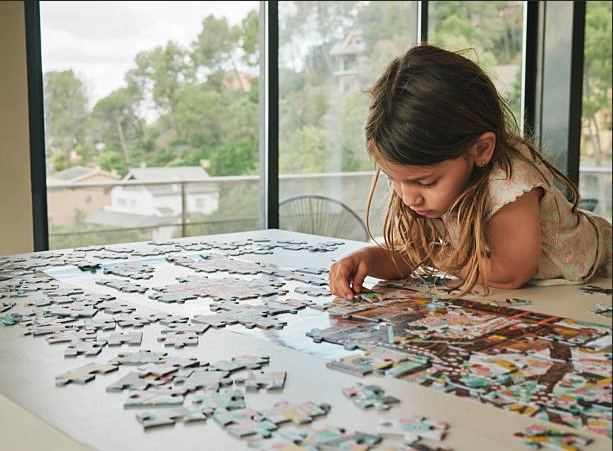
A panoramic landscape jigsaw looks stunning when completed, but its extra-wide shape can quickly turn puzzle night into a battle for table space. Pieces spread across every available corner, sorted sections get mixed up, and suddenly, your workspace feels smaller than the puzzle itself. The good news is that you do not need a huge dining table or dedicated puzzle room to keep things organized.
Instead, a smarter setup can help you sort, build, and store sections without creating clutter. With the right approach, you can enjoy the challenge while keeping every piece organized and within easy reach.
Key Takeaways
- Measure your table before opening the puzzle.
- Use a movable board for easier storage.
- Keep loose pieces organized in trays.
- Work on recognizable sections separately.
- Protect unfinished sections between sessions.
- Plan ahead if you want to display the finished puzzle.
Smart Ways to Manage Table Space for a Panoramic Landscape Jigsaw
1. Measure Your Available Space Before Opening the Puzzle
Before emptying the box, check the finished dimensions printed on the packaging. Then measure the table, desk, or other surface you plan to use.
Do not compare only the puzzle dimensions with the tabletop dimensions. You also need some working room around the edges. If the finished puzzle almost completely covers the table, there may be nowhere to place loose pieces.
Before starting, check:
- Finished puzzle width and height
- Available tabletop dimensions
- Space needed for sorting pieces
- Whether the table is required for meals or work
- Whether the puzzle will need to be moved between sessions
This simple check helps you choose a setup that works before hundreds of loose pieces are spread across the table. It is especially important when working on a panoramic landscape jigsaw, since the finished image may require considerably more horizontal space than a standard puzzle.
2. Use a Separate Puzzle Board as Your Main Work Surface
A removable puzzle board is one of the easiest ways to manage a panoramic landscape jigsaw in a smaller home. Instead of building directly on the table, place the puzzle on a rigid board that can be moved when necessary.
The board should be slightly larger than the puzzle's completed dimensions. Foam board, lightweight wood, or a purpose-built puzzle board can work, provided the surface stays flat.
This setup has two major benefits. First, the table does not become permanently occupied. Second, you can move the entire puzzle instead of breaking apart completed areas whenever the table is needed.
For extra stability, place a puzzle mat or non-slip material between the board and the pieces.
3. Sort Pieces Vertically Instead of Spreading Them Out
One of the biggest causes of overcrowding is not the puzzle itself. It is the loose pieces surrounding it.
Many people spread every piece face-up around the main puzzle. That method may work for a small square puzzle, but it can consume valuable space in a panoramic design.
Use shallow trays, box lids, stackable organizers, or small containers instead. Sort pieces according to visible characteristics, such as:
- Edge pieces
- Sky and clouds
- Trees and vegetation
- Water
- Mountains
- Buildings or landmarks
- Strong or unusual colors
- Highly recognizable details
If you enjoy scenic New Hampshire puzzles, for example, separating mountain ridges, foliage, water, and sky can reduce the number of pieces you need to examine at one time.
Stack or store trays nearby and bring out only the category you are currently solving.
4. Build the Panoramic Landscape Jigsaw in Manageable Sections
A panoramic puzzle jigsaw does not have to be completed as one continuous structure from the beginning.
Instead, divide the image mentally into several visual zones. A mountain scene, for example, might contain a large sky section, a distant mountain range, a forest, and a foreground.
Complete recognizable areas separately on smaller boards, trays, or unused sections of your main board. Once a section becomes large enough, carefully move it into its approximate position.
This technique is especially useful for a landscape jigsaw because scenic images often contain natural visual boundaries.
The goal is to reduce the amount of active space needed at any one time. You can concentrate on one part of the picture while keeping unrelated pieces out of sight.
5. Complete the Border Without Letting It Control Your Workspace
Starting with edge pieces is a familiar puzzle strategy, but a panoramic border can occupy a surprising amount of space.
If your board comfortably fits the complete puzzle, assembling the full border first can establish the dimensions and orientation. However, if space is extremely limited, consider building the long edges in separate sections.
You can connect those sections as the interior develops.
Also, pay attention to where you position the puzzle. Starting directly in the middle of the table may waste useful working space around it. Positioning the puzzle strategically toward one side can leave a dedicated area for your active sorting tray.
6. Use the Reference Image to Reduce Unnecessary Searching
The box image becomes especially useful when table space is limited. Instead of keeping dozens of possible pieces in front of you, study the reference and identify specific visual markers.
Look for details such as:
- Changes in the mountain skyline
- Distinct tree shapes
- Buildings or structures
- Snow boundaries
- Shorelines
- Reflections
- Color changes across the sky
Suppose the puzzle shows a winter mountain scene similar to imagery commonly used for ski wall art. Snow-covered slopes, dark tree lines, ski trails, and elevation changes can provide natural reference points for sorting and assembly.
The more precisely you identify an area, the fewer pieces you need on your immediate work surface.
7. Rotate Your Working Area Instead of Reaching Across the Table
The long shape of a panoramic puzzle jigsaw can make one end difficult to reach, particularly on a deep table. Repeatedly leaning across completed pieces increases the chance of accidentally separating them.
If you are using a portable board, rotate or reposition it when working in another area.
You can also change your seating position. Work from one end for a while, then move your chair to the opposite side. This simple adjustment keeps the active section close to you without requiring extra table space.
8. Store Unfinished Work Safely Between Sessions
A panoramic puzzle jigsaw may take several sessions to finish, so storage should be part of your plan from the beginning.
If you need the table for other purposes, you can:
- Slide a rigid puzzle board under a bed or sofa
- Place another lightweight board over the puzzle for protection
- Store sorted pieces in labeled trays
- Use containers with lids for small piece groups
- Keep completed sections on separate flat boards
Avoid placing heavy objects directly on assembled pieces. Also, choose a dry storage location where the board will remain flat.
A good storage system means you can stop at any point without losing your organization.
Conclusion
Solving a wide puzzle in a limited area becomes much easier when you plan your workspace before placing the first piece. A portable board, organized sorting trays, section-based assembly, and careful storage can keep your table usable throughout the process.
A panoramic landscape jigsaw does not require a huge dedicated surface when each stage is managed with space in mind. Keeping active pieces close, moving completed sections carefully, and protecting unfinished work between sessions can make the experience more comfortable and organized. With a practical setup, you can enjoy the challenge without letting the puzzle take over your entire room.
Find scenic puzzle designs that fit your interests and display plans at New England Wall Art Puzzles, and choose your next landscape challenge with confidence.
FAQs
Can you frame a completed panoramic puzzle?
Yes. Secure the puzzle with glue or adhesive sheets, then place it in a frame that matches its finished dimensions.
Should you use puzzle glue for display?
Puzzle glue can help keep all pieces firmly connected for long-term display. Let it dry completely before moving or framing the puzzle.
Can a finished puzzle be used as Boston wall art?
Yes. A scenic puzzle can work as Boston wall art when its subject and colors fit the room's decor and overall style.
What lighting is best for landscape puzzles?
Bright, even lighting makes small color differences easier to see. A desk lamp can help when natural light is limited.
How Can You Protect Puzzle Pieces from Pets?
Keep loose pieces in trays or containers with lids. Cover or store the puzzle board when you are not working on it.

